In recent months, a series of highly visible Democratic primary and general election campaigns — from Tucson, Arizona, to New York City.
Have underscored a persistent and growing tension within the U.S. progressive movement: viral online momentum and cultural visibility do not always translate into electoral success.
Especially when contrasted with deep‑rooted community engagement and…
In recent months, a series of highly visible Democratic primary and general election campaigns — from Tucson, Arizona, to New York City.
Have underscored a persistent and growing tension within the U.S. progressive movement: viral online momentum and cultural visibility do not always translate into electoral success.
Especially when contrasted with deep‑rooted community engagement and field organizing. The results of these races reveal something critical about contemporary American politics — namely, that digital popularity alone is not a substitute for grassroots organizing and local voter trust.
The contrasting outcomes in Arizona’s special congressional primary and New York City’s mayoral election offer a clear window into these dynamics and what they mean for the future of Democratic coalition‑building.
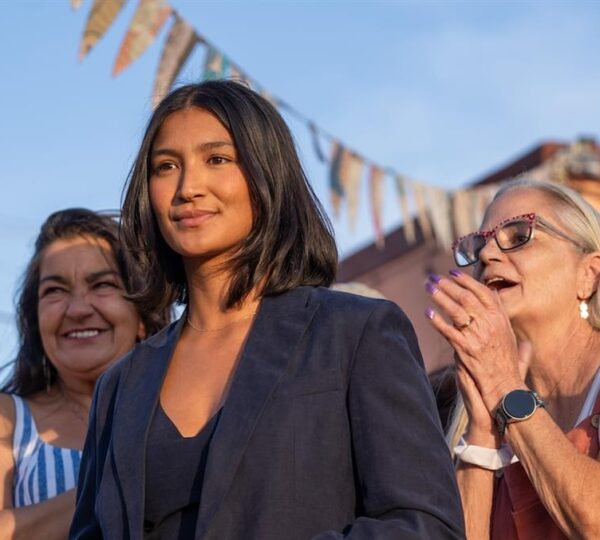
The Arizona Special Election: Deja Foxx and the Limits of Digital Fame
In Arizona’s 7th Congressional District — a heavily Democratic seat long held by Congressman Raúl Grijalva — a charged primary contest unfolded in the summer of 2025 following Grijalva’s death from cancer.
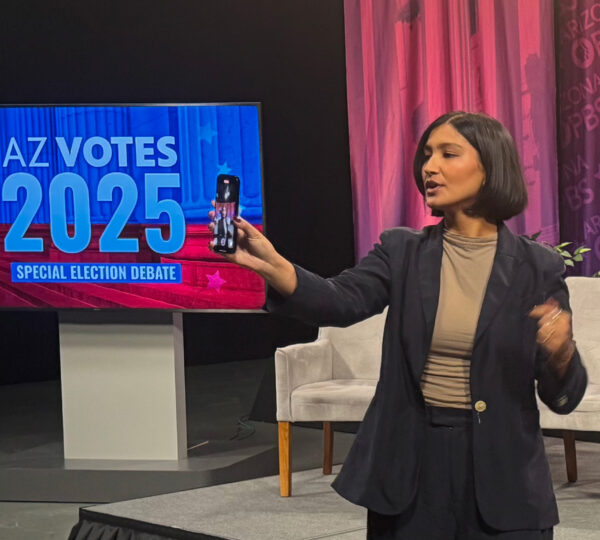
The special primary on July 15, 2025 drew national attention because it pitched two distinct visions of progressivism against each other: the digital‑native “influencer” candidate Deja Foxx and Adelita Grijalva, a long‑time community leader with deep local ties and experience in elected office.
Who Is Deja Foxx?
Deja Cherise Operana‑Foxx first rose to national prominence as a teen activist urging updates to reproductive health policies and became widely known for a viral moment confronting then‑Senator Jeff Flake over defunding Planned Parenthood.
Her social media presence — particularly on TikTok — has been substantial, with hundreds of thousands of followers and millions of views on campaign content.
When she announced her candidacy on April 2, 2025, Foxx’s campaign was framed as a new model for progressive engagement: “crash out or Congress,” she said, emphasizing that her lived experience — spanning struggles with housing security and economic precarity — differentiated her from more traditional candidates.
Foxx’s strategy leaned heavily on online storytelling, viral engagement, and narrative appeal.
Her supporters viewed her as a potential symbol of generational change and revitalized energy within the Democratic Party.
Many pointed to her small‑donor fundraising model — mostly contributions under $200 — as evidence of a broad and enthusiastic grassroots base.
Adelita Grijalva: Community Legacy and Electoral Strength
Opposing Foxx was Adelita Grijalva, a 54‑year‑old former Pima County Supervisor and the daughter of the late Raúl Grijalva, a progressive stalwart in Arizona politics.
Adelita’s own record included decades of service in local governance, advocacy on education and immigrant rights, and a long‑standing presence in the district.
Grijalva’s campaign was marked by endorsements from several top Democratic progressives — including Senators Bernie Sanders and Alexandria Ocasio‑Cortez — as well as prominent local figures.
Her messaging emphasized deep ties to community work, worker and immigrant rights, and continuity of Grijalva’s progressive legacy.
A Decisive Loss for Foxx: Results and Interpretations
When votes were tallied, Grijalva won a convincing victory, defeating Foxx by a margin of approximately 40 percentage points in the Democratic primary. Foxx finished with roughly 22.4 % of the vote compared to Grijalva’s commanding lead.
Observers characterized the race as one of expected viral momentum colliding with the realities of district politics: Foxx’s national profile and cultural notoriety did not effectively translate into the delicate and long‑term voter trust needed in this particular district.
Political analysts noted that many of Foxx’s followers were outside the district and not eligible to vote locally, underscoring a key drawback of online engagement that is untethered from on‑the‑ground voter contact.
Meanwhile, Grijalva’s campaign emphasized building relationships within the community, participating in local events, and articulating specific policy agendas relevant to residents.
Young voters — even those split initially — rallied around her after the primary when canvassing efforts and volunteer mobilization increased, demonstrating the power of disciplined, neighborhood‑level organizing.
What Arizona’s Result Signals
Far from rejecting progressive ideas outright, Arizona voters favored familiarity and long‑term commitment to community issues over online fame and scattered digital enthusiasm.
It suggested that charismatic storytelling needs to be paired with authentic local engagement, policy clarity, and voter contact to convert online attention into real electoral traction — especially in races where personal connection and triage with local priorities matter.
The Arizona primary became a stark reminder that social media influence is not a substitute for decades of relationship‑building, and that without substantial organizing infrastructure on the ground, digital attention can have limited political payoff.
New York City: Zohran Mamdani and Progressive Organizing in Action
In sharp contrast to Arizona’s influencer‑driven narrative, the story of Zohran Mamdani’s victory in the 2025 New York City mayoral election illustrates how deep grassroots organizing — rooted in community networks, tenant activism, and sustained face‑to‑face voter engagement — can deliver breakthrough results even against well‑known political figures.
Who Is Zohran Mamdani?
Zohran Mamdani, a 34‑year‑old Democratic Socialist and state assembly member, emerged from relative obscurity to capture the Democratic nomination and then the general mayoral election in New York City on November 4, 2025.
He ran on a platform focused on affordability, housing justice, transit access, and economic equity — themes that resonated with a broad coalition of voters concerned about the city’s cost of living and social disparities.
Mamdani’s campaign was built on a massive grassroots field operation — one described by many observers as the most expansive in the city’s political history — including tens of thousands of volunteers, millions of direct voter contacts, and exhaustive neighborhood outreach that connected with working‑class communities across the five boroughs.
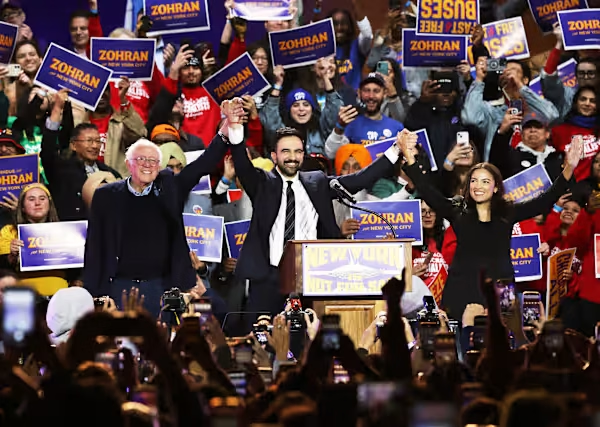
This approach stood in stark contrast to the notion that a viral moment alone can drive electoral success.
Instead, Mamdani’s victory was propelled by sustained on‑the‑ground organizing, from house meetings and tenant assemblies to mutual‑aid initiatives and prolonged neighborhood engagement.
Historic and Symbolic Win
Mamdani’s November win was historic in several respects:
He became the first Muslim and first South Asian mayor of New York City.
At 34, he became the city’s youngest elected mayor in more than a century.
His election marked a significant shift toward a progressive, community‑centered governance model in the nation’s largest city.
By campaigning on concrete policies — fare‑free buses, rent stabilizations, universal childcare proposals, and progressive tax changes — and by diligently knocking on doors and knocking down barriers to participation, Mamdani crafted a winning coalition of voters frustrated with the status quo but still deeply connected to their local neighborhoods.
Different Paths, Different Outcomes: What They Tell Us
1. Online Influence vs. Ground Game
Arizona’s primaries demonstrated that vast social media followings and viral narratives do not necessarily equate to electoral victory, particularly when a candidate’s presence in the community is limited and its influence isn’t anchored by local organizing.
Foxx’s campaign, though supported by digital engagement and national figures, lacked the comprehensive groundwork that ordinary voter contact and neighborhood relationships provide.
New York’s chaotic and transformative mayoral race, on the other hand, showed that even candidates without early national visibility can prevail if they build sustained, interpersonal connections with voters and address concrete daily concerns — housing affordability, transit equity, and economic opportunity.
Mamdani’s approach proved that voters will reward efforts grounded in decades‑long organizing and policy substance.
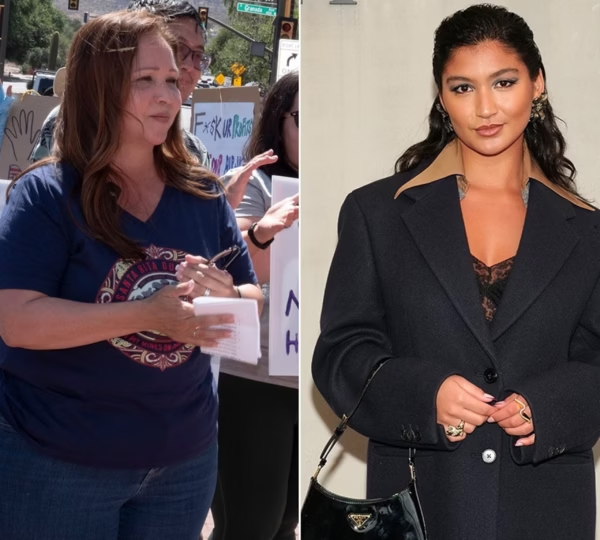
2. The Value of Local Trust and Familiarity
Arizona voters gravitated toward Grijalva not out of rejection of youth or progressivism, but because they trusted a candidate with demonstrated local commitment — someone who had decades of public service and ongoing neighborhood relationships.
Grijalva’s progressive credentials were well known locally, and her campaign focused on substantive policy engagement rather than personality.
Similarly in New York, Mamdani’s long history of advocacy and community organizing in Queens — not just online rhetoric — built confidence among voters who saw in him a genuine, sustained presence advocating for their interests.
3. Progressive Identity Is Not One‑Size‑Fits‑All
Arizona’s race also illustrated nuance within progressive politics.
Foxx and Grijalva both ran on broadly progressive platforms, but the campaign ultimately became less about ideological purity and more about which candidate voters felt most connected to and confident in representing their needs.
In New York, progressivism was married to strategic messaging and policy precision that spoke directly to constituents’ economic and social anxieties, inviting participation rather than spectacle.
What These Races Mean for Democratic Politics Ahead
The contrast between Arizona and New York highlights a broader challenge facing progressive movements, especially in the post‑2024 political landscape where digital culture plays an outsized role in political identity:
Social media and viral narratives are powerful tools for visibility, particularly among younger voters and issue advocates. But visibility must be translated into real voter mobilization and credible local engagement to win elections.
Progressive energy resonates most when tied to sustained organizing infrastructure, clear local policy platforms, and deep, trustworthy relationships with voters.
Voters still value experiential grounding and authenticity over digital fame alone, particularly when deciding who will represent them in government.
As the Democratic Party and progressive movement look toward the 2026 midterm and 2028 presidential elections, these lessons do not suggest abandoning digital engagement — rather, they emphasize that online momentum must be tethered to offline organizing if the energy generated in the digital sphere is to translate into electoral power.
Conclusion: A Tale of Two Strategies
The recent elections in Arizona and New York together offer a compelling lesson about how modern progressive politics can succeed — and where it can fall short.
Viral energy and charismatic narratives have their place, but they are most effective when they enhance rather than replace the hard work of connecting with voters where they live, work, and organize.
Adelita Grijalva’s victory in Arizona showed that voters reward deep community engagement, while Zohran Mamdani’s historic win in New York demonstrated that broad, inclusive grassroots organizing can reshape even the most competitive political environments.
These combined outcomes suggest a future where digital influence and disciplined, sustained organizing must work hand in hand to build enduring political power.