Puzzles have long been a source of entertainment, but they are far more than that—they are a crucial tool for brain development. From jigsaw puzzles to complex riddles, these mental exercises stimulate cognitive functions, improve memory, and enhance problem-solving skills. One particular type of puzzle that sparks curiosity and challenges the brain is the riddle. In this article, we will explore the significance of puzzles for brain development and how solving them can strengthen your mind, starting with the fun riddle:
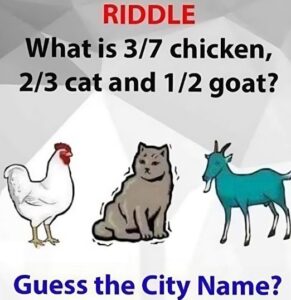
At first glance, this riddle seems perplexing. It’s the kind of puzzle that tests your logic and thinking outside the box. The answer to this riddle is surprisingly simple, but let’s break it down first.
3/7 Chicken: If you look at the word “chicken,” you’ll notice that the first three letters (CHI) are 3/7 of the word.
2/3 Cat: For the word “cat,” the first two letters (CA) represent 2/3 of the word.
1/2 Goat: And in the word “goat,” the first half (GO) gives you the final clue.
So, when you combine these parts, you get the word “Chicago”. This clever riddle not only engages your thinking but also demonstrates the power of language and reasoning in puzzle-solving.
The Cognitive Benefits of Solving Puzzles
Engaging with puzzles like riddles, crosswords, and brain teasers offers a wide range of cognitive benefits. These activities are not just fun, they also contribute to the development of essential mental faculties.
1. Enhancing Problem-Solving Skills
Puzzles force you to think critically and devise creative solutions. In the case of our riddle, the challenge lies in deconstructing the words and reassembling them to find the answer. This process enhances problem-solving skills by encouraging lateral thinking, where you consider unconventional methods to arrive at the correct solution.
2. Boosting Memory and Retention
Regularly engaging with puzzles can improve memory and retention. Memory is a key component of solving many puzzles, especially those that require recalling patterns, rules, or specific details. Whether it’s remembering pieces in a jigsaw puzzle or recognizing familiar letter combinations in a riddle, your brain’s ability to store and retrieve information is strengthened through practice.
3. Strengthening Focus and Concentration
Puzzles demand attention and concentration. When solving a complex problem, your brain must focus on the details and avoid distractions. Puzzles like Sudoku, crosswords, and riddles train your brain to maintain sustained focus, which can also translate into better concentration in other areas of life, such as work or study.
4. Encouraging Patience and Perseverance
Not all puzzles are solved in an instant. Many require perseverance and patience, especially when the solution isn’t immediately obvious. The sense of achievement that comes from finally solving a challenging puzzle builds resilience, showing that persistence pays off in the end.
Puzzles, whether they’re fun riddles like our “Chicago” challenge or complex brain teasers, are the foundation for cognitive development and brain health. They challenge the mind, encourage creative thinking, and help build essential problem-solving skills. Whether you’re a child, an adult, or a senior, incorporating puzzles into your daily routine can lead to a sharper mind, improved memory, and a more focused approach to everyday tasks.
So next time you come across a puzzle, whether it’s a riddle or a jigsaw, take a few moments to engage with it. Your brain will thank you for the workout!