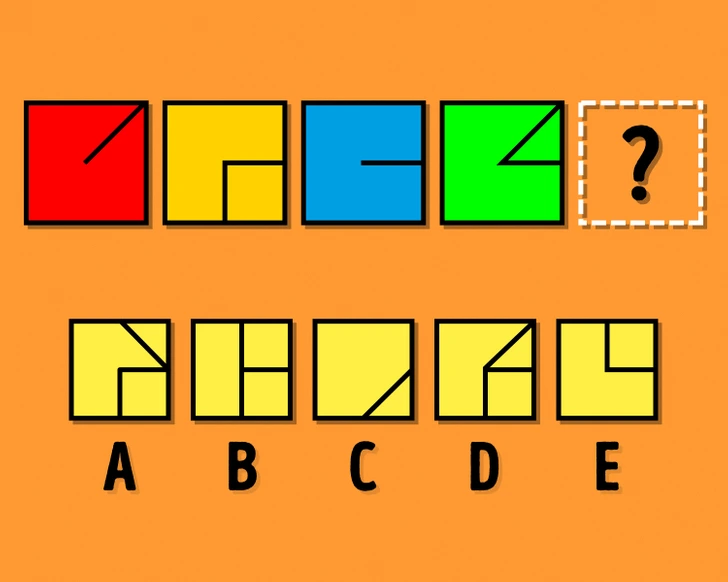
Puzzles have long been a fun and engaging way to keep our brains sharp. They push us to think creatively, observe closely, and develop problem-solving skills. Today, we present you with a visual puzzle that’s sure to get those gears turning. Look at the series of colored squares and ask yourself: Which square should replace the question mark? It might seem simple at first glance, but looks can be deceiving. Before you scroll down for insights, take a moment to solve it yourself!
Many people approach puzzles like these by focusing on the most obvious elements, such as colors. But the trick with this puzzle is to look deeper. The true solution lies in recognizing the structure of the shapes and the lines inside each square, not just the color pattern. Let’s break down how to solve this step by step.
Surface-Level Observations Can Mislead You
One of the most common pitfalls when solving puzzles is rushing to conclusions based on the first thing that grabs your attention. In this puzzle, it’s easy to focus on the bright colors of the squares—red, yellow, blue, and green. But color isn’t the key here. Instead, it’s the arrangement of lines within the squares that holds the secret. Many people fall into the trap of assuming the solution lies in a color pattern, but the challenge is actually about geometric progression.
Step 1: Analyze the First Square (Red)
Let’s begin with the first square, which is red. This square features a simple diagonal line running from one corner to the other, dividing the square into two equal triangles. This straightforward design lays the groundwork for the puzzle. As you move through the squares, you’ll notice that each square introduces a new element while maintaining this diagonal foundation.
Step 2: Understand the Second Square (Yellow)
Now, take a look at the second square, which is yellow. Here, we don’t see the same diagonal division. Instead, there’s a small square in one of the corners. This change emphasizes structure and positioning rather than symmetry. The introduction of a corner-based element hints that each square will build on the last, adding complexity as we move forward.
Step 3: Study the Third Square (Blue)
In the third square, colored blue, the puzzle takes another turn. This time, a horizontal line splits the square into two equal halves. This square, unlike the others, introduces a horizontal division, moving away from diagonal lines and focusing on a new type of separation. Pay attention to how the design evolves, adding layers to the puzzle.
Step 4: Examine the Fourth Square (Green)
The fourth square, green in color, is where things get interesting. It brings back the diagonal line seen in the first square, but there’s more. One half of the square includes an additional section, creating a more intricate design. This square hints that the pattern combines both diagonal and horizontal elements, with an extra focus on added shapes within the divisions.
Step 5: Spot the Progression of Shapes
By now, you should notice that each square builds upon the one before it, adding complexity while maintaining elements from previous designs. The puzzle is no longer about color; it’s about recognizing how the shapes evolve. Diagonal lines, horizontal splits, and new sections all contribute to the progression.
Step 6: Determine the Correct Square
Now, it’s time to solve the puzzle. Which square comes next? After analyzing all the available options, it becomes clear that Square E is the correct choice. This square forms a complete horizontal row, following the progression of 1, 2, 3, 4, and now 5. Square E fits into the sequence because it combines the diagonal and horizontal lines seen earlier, while adding its own unique element, much like the squares before it.
Why Square E?
Let’s break it down:
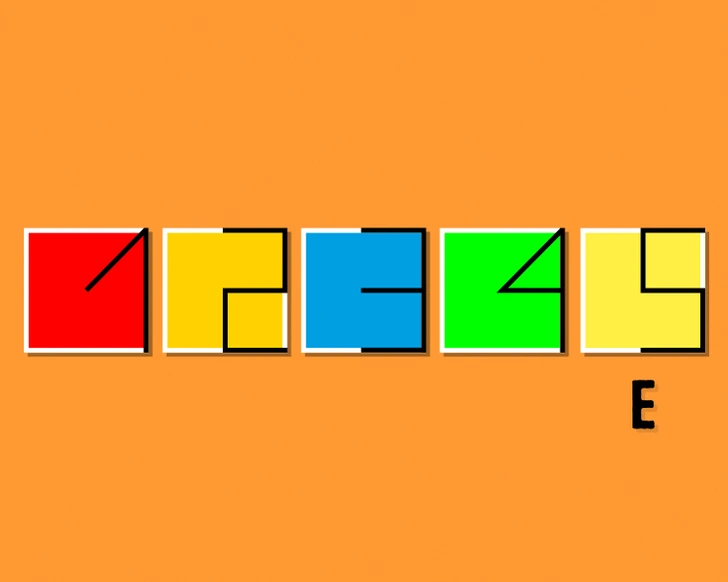
Diagonal and Horizontal Lines: Square E incorporates diagonal lines similar to the red and green squares, while also introducing new shapes within the divisions, continuing the pattern.
Building Complexity: Each square in the puzzle builds on the last, introducing new elements while maintaining key structural features. Square E continues this trend by incorporating diagonal lines and an additional shape.
How Did You Do?
Did you arrive at the same conclusion? Whether you guessed correctly or took a different path, puzzles like this one challenge us to think beyond the obvious. The trick was in recognizing how each square evolved, adding complexity while staying true to the pattern established in the first square.
What This Puzzle Teaches About Problem-Solving
Visual puzzles like this offer more than just a bit of fun—they’re great tools for improving your critical thinking skills. By taking the time to analyze each square carefully and spot the underlying pattern, you exercised your ability to think logically and observe details that aren’t immediately obvious. The best part? The more you engage with puzzles like this, the sharper your brain becomes at solving them
Whether you solved the puzzle or not, what matters most is the journey of figuring it out. Puzzles like these push us to think critically, observe details, and stay patient in our search for the solution. The satisfaction of finding the right answer is rewarding, but the cognitive benefits of challenging yourself with puzzles are even more valuable.
If you enjoyed this puzzle, why not try more? The more you practice, the better you’ll become at solving even the trickiest brain teasers. Ready for the next challenge? Let’s go!